Oceanic Cruise of the HMNZS Endeavor


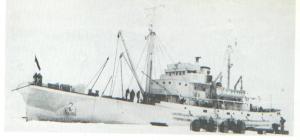
endeavour_1Ross Sea, January 1959

Sometime before our departure for the Antarctic, in October 1958, it was agreed upon by Dr. Miller that he would be a guest of the New Zealand Oceanographic Institute on their oceanic cruise aboard the HMNZS Endeavor in January, 1959. Due to circumstances, Dr. Miller was unable to meet the scheduled cruise and being his assistant, I took his place on the ship as the USA representative.

The Endeavor is a wooden ship of 185 feet. It was not an icebreaker and the crew lived in constant fear of being closed in by the pack ice and crushed. There were many of our scheduled stations, which we could not run because of pack ice.

The scientific personnel consisted of five New Zealand scientists and myself. We were scheduled to run 40 research stations when we left McMurdo in January. Due to the lack of time and bad weather, we ran only 20. We had a standard procedure at each station, which was as follows:

  • First, a sounding was taken by exploding a submerged hand grenade and calculating the depth of the water by the time it took for the shock wave to hit the bottom and bounce back to the surface. This was the only method of sounding we had.
  • Next, when the depth was established, a wire cable was sent to the bottom with a heavy weight and reversing water bottles strapped at intervals from the bottom to the surface. They record temperature, pressure, and bring back a sample of the water at each depth.
  • Third, a Bathythermograph record was taken.
  • Fourth, we sent a plankton net, a meter in diameter, to the bottom and took a vertical sample, from the bottom to the surface.
  • We took bottom samples with a 100 pound orange peel grab to depths of 6000 feet.
  • We would then put in the bottom fish trawl/net and pull it for about 30 minutes across the bottom.

Accomplishing the above took from seven hours to as long as fifteen hours, depending on the depth of the water. At a deep station, it would take as much as an hour and a half, just to lower and raise the wire to the bottom and back.

All six of us would work each station. It kept three men busy, just sorting the material and storing it in the containers for three to six hours during each station. The collection and preservation and storage had to be done quickly or the samples would freeze solid on the deck. When several of the men became ill, it increased our workload and slowed our progress tremendously, making the work situation worse.

A storm hit us after we were out for one week, and all operations stopped. The seas became so rough that the captain went off course nearly two-hundred miles because he was afraid of coming around in the seas that were as high as ninety foot waves. When he finally decided to turn, he sent word to all hands that they were to be prepared for a heavy role. The ship came about, but it did take a 62° role in doing so.

There were not many humorous happenings on the cruise. It was cold 98% of the time and just plain hard work. However, there was one situation that we all, well almost all, laughed at.

When the ship was brought about in the storm, and took a 62° role, we were eating breakfast in our scientific quartiers. We ate at a long table that was set across the ship from side to side. There were six of us, three sat on one side, two, on the other side, and one on the end of the table. Breakfast on the New Zealand ship started every morning with a bowl of oatmeal. It was served in a heavy bowl with a wide-spreading brim around the edge. Each of us had a space in front of us that was fenced in with a little wooden fence, about one inch high, so our food wouldn’t slide as the ship rolled from side to side. This is standard on many oceangoing vessels.

We were in the oatmeal part of our breakfast, when the captain decided to come about. That was when we took the 62° role. All six of us thought we were going to capsize, and grabbed the table to keep from falling over onto the floor. That left six bowls of oatmeal free to slide over the little fences, bump-bump-bump, and onto the man at the end of the table, who had to let go of the table to protect himself from the flying oatmeal bowls, and was now flat on his back covered in oatmeal.

Once the boat came back from the role, and we decided we were not all going to die, we couldn’t stop laughing at our slimy comrade. It took about two days before he started to laugh.

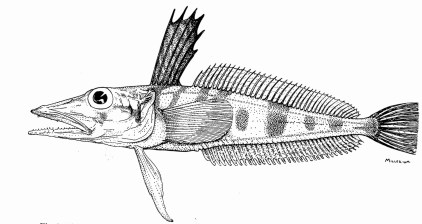
We caught 93 fish, which we preserved. I got to bring them home with me when I left the ice, and take them back to Long Beach State College, on loan from New Zealand, to work on my Master’s degree with them.

The next blog will tell the story of how the fish got to Long Beach to be studied….Funny.

A Friend Missed


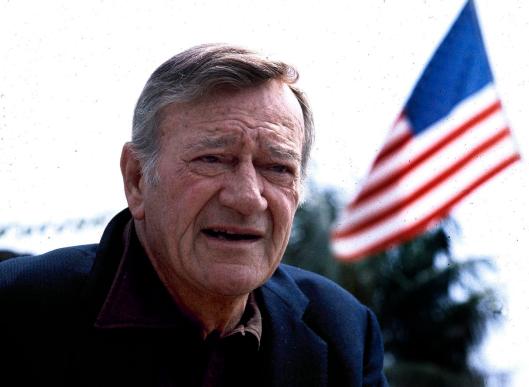
John Wayne

I was living on a 40 foot sailboat, I rented for a year, and had the opportunity to make a friend that I didn’t take. It is one of the few things in my life that I would change if I could.

The boat I lived on was kept in a slip in Newport Beach, California. I was renting it for only $50 a month because the owners had two, full-size, Standard poodles aboard that I was looking after, while they were on a year-long teaching assignment out of the country. I took the two dogs for a walk at 6 AM every morning before I went to work at Santa Ana College.

One morning, as the dogs and I were finishing our walk, a man came out of his house and picked up his newspaper from the lawn. He was in a bathrobe and slippers. I knew who he was, and I knew that he lived there – everyone knew he lived there.

He was only 15 feet from me, so I said, “Good morning, John.” He looked up at me and I could tell he was trying to figure out who I was, so I continued the conversation with, “I thought about saying good morning Duke, but I don’t know you well enough to do that. I also considered good morning Mr. Wayne, but I’ve seen all of your movies, and that seemed too formal. The only thing left was John.”

He broke into a real belly laugh at that and said, “Come on in and have a cup of coffee.” Then I made the only big mistake I ever made in my whole life.

I said, “Thank you, but I have a class waiting for me at the college. I have to be there by 8 o’clock.” We said a few more words back and forth and laughed a little bit and then I took the dogs and we went back to the boat, and I went to work.

 My mistake was entirely my father’s fault, he’s the one that taught me my work ethic.


Close Encounter of the Eight-Legged Kind


octopus2

This isn’t Dave, but it’s a good picture.

octopus

This isn’t Dave, but it looks a lot like him.

I have made many good friends in the diving world, one of them is Dave McLaren. I met Dave at Simon Fraser University in British Columbia, Canada. When I was the course director of a diving instructors program. He was on my staff. Dave now lives in Texas. He has been reading my blog and contacted me about an article he wrote for a magazine in British Columbia in 1991. He thought my blog readers would enjoy reading it. He sent it to me, and I agreed, so I retyped it. If there are any errors in it, it’s my typing, not his, and I left some out to shorten it for the blog.
“The waters off Canada’s West Coast team with life………….. One of these creatures, the octopus, is startling divers and scientists by displaying large amounts of an unsuspected quality: intelligence. Long believed to be the evil devilfish, lying in wait to reach out and drag unwary fisherman screaming to their dooms, the octopus is, in truth, a shy, timid creature who wants above all to be left alone……….. Cousteau after studying the octopus, called it the “soft intelligence.”
Some years ago, I had occasion to meet an octopus informally. Intimately.
We were returning from an enjoyable but uneventful dive off of Whytecliffe Park in West Vancouver, and were making our way slowly upward along a fissure in the rock face. An octopus was gliding on his tentacles down the same fissure, when we met at a depth of 30 feet.

We estimated him to be 12 feet across as he backed slowly and wearily into a recess. He curled his eight tentacles beneath himself and sat watching us. I reached out with one finger on my gloved left hand, and stroked him gently between the eyes, which diver lore said would pacify him. He backed up a little more, staring impassively at me with his unwinking, golden eyes. I stroked him again, and he stopped backing away, so my companion and I vented (the air out of) our suits and settled on the bottom to enjoy his nearness. For several minutes divers and octopus watched one another’s movements.
I looked over at Ann Williams, my diving buddy. She was grinning with delight, her shoulders hunched in a characteristic gesture of hers that says, “Wow!”
One tentacle moved from beneath the octopus’s body, slowly uncoiling toward me, until the delicate tip touched my left mitt. It was as if we could hear him thinking, “Hmm… normal temperature; soft; no mucus membrane.”
The tentacle moved up the arm of my nylon suit. “Different texture.”
The tip touched the face of the gauge on my arm. “Different texture again! What are these creatures made of?”
The tentacle moved smoothly, walking on sucker disks until it lay up my arm, from my fingertips to my shoulder. A second tentacle uncoiled then as the octopus, his curiosity fully around, continued his investigation of the two strange beings who had entered his domain. It touched the Mitt on my right hand, and worked its way up past my elbow to my shoulder, giving tentative tugs along both arms as if to assess mass and holding power.
“So far, so good,” he seemed to conclude. “The creatures seem passive and friendly. Perhaps touching between the eyes is a gesture of friendship in their home area. I’ll try it.”
A third tentacle uncoiled, whip-like, through the water, faster this time, more confident. It’s touched my forehead above my mask, and began exploring. It moved over and around my hood, onto my mask faceplate, down on to my regulator mouthpiece. The octopus’s thoughts were clear: “This part is moving.”
He gave light tugs on the regulator second stage. The sensitive tentacle tip moved over my rubber mouthpiece and touched my beard. There was a momentary hesitation, a drawing back, then it touched my beard again. “Parasitic growth?”
The probing continued, touching my lip. I felt the tentacle tip probe between my lips and touch my teeth on the right side of my mouth. It moved slowly into my mouth along my teeth, all the way back to my molars. I thought about the movie Alien.
At this point, I felt the exploration had progressed far enough, and gently shook my upper body, head, and arms.

The octopus immediately let go with all three tentacles. He did not withdraw them, though, and after a few seconds, he gently put them back on me. Again I gave a slight shrug, and again the octopus let go. This time, he retracted his tentacles to their original position beneath his body.  His thoughts reached us through the water. “I must have frightened them. Sorry about that!”
We regarded one another quietly for another few moments, then the octopus moved away from the wall, toward Ann and me. Unhurried and unworried, he passed between us, moving down the seabed to deeper water. We watched him amble off, remaining stock–still ourselves. He neither stopped nor look back.
Ann finally nudged me on the shoulder, indicating that we should resume our ascent. Reluctantly, we did.
Back on shore. We must have looked like a pair of fools. We couldn’t stop grinning all day.”

I hope you enjoyed this as much as I did. Thank you Dave McLaren.

Teaching Stories at the College


After teaching for two years at Valley High School, I took a semester off to try a different field. I decided that teaching was really my calling, and I returned to it. I taught at Santa Ana High School for one semester, and then had the opportunity to move to Santa Ana Community College. I spent the next 28 years there. During my time there I taught many different courses. I taught biology, marine biology, physical oceanography, SCUBA diving, martial arts, archery, and survival courses, along with helping develop science teaching for the grammar school program. I also taught part-time at UCLA, UCI, Cal State Fullerton, and Orange Coast College at night and on weekends.

The community college is, I think, the premier place to teach. Most of the students there are there to truly get an education, not because their parents said they had to go to school. They live at home, so they study, instead of partying – which is really easy to get caught up in when you are, ‘away at school’. Many need a little extra help, or encouragement, to make it through. In the junior college it is easier to come by those things, than it is in the university. In my 28 years of teaching at the College, I have hundreds of stories, and I will share just a few of them with you.

Trash

One afternoon I was on my way to have lunch at our cafeteria and was walking across the Commons area, which was full of students, walking in all directions, going this way and that.

There was a handicap, female student a ways in front of me, walking with two crutches, the kind that are not temporary. I saw her stop, and with great effort, bent down and picked up some trash that everyone else was just walking over. She put it in her bag. She had my attention now, so I watched her. She made her way to a trashcan some 50 feet away, and put the trash in the can. Then she went on her way.

I was so impressed with the effort she put out to pick up the trash, and the attitude it took for her to do it, when everyone else, including me, was just ignoring it. Ever since that day, I have picked up trash whenever I see it. It may not be mine, but I live on this earth, and I don’t want trash where I live. And besides, it’s the right thing to do. She entered my life again several years later. (See the Yawara story.)

yawara

The Yawara Stick

One of my martial arts classes that I taught was self-defense. The way I taught it was a mixture of judo, karate, and just good old street fighting. When you are defending yourself, there are no rules. It helps if you have a weapon of some kind, and know how to use it. Most weapons are illegal to carry, so most of us don’t have one with us when we are out and about.

I taught my students how to make a weapon and have it on their person all the time, and never have it questioned. It was my version of a yawara stick. It consisted of a dowel that was cut just to the length of the width of your palm, from the thumb side, to the little finger side. A big hand would use a ¾ inch Dowel, a small hand used a ½ inch dowel. On each end a small knob, like the ones on drawers, was screwed on. Then you painted it some wonderful pattern that you liked. Perhaps like a totem pole, and place it on an aluminum chain, then carried it around your neck as a necklace. It made a wonderful conversation piece when people asked you what it was. Make up a good story. My story was that an Indian friend gave it to me as a symbol of friendship, and protection.

When needed for self-defense. It was accessible with either hand, the aluminum chain broke easily, and it was a devastating weapon when you knew how to use it. I taught my students how to use it, and they all made themselves one for about two dollars.

Now the best part. One of my self-defense classes was for the physically challenged. I was disgusted when my students in that class told me how many times they had been targeted by thieves – they were easy, soft targets. ATM machines were the worst spot. They would take their money out, someone would grab them from behind, or knock them down, and take the money.

My girl with the two crutches, from the trash story showed up in my class. She didn’t know anything about what I knew about her. As it turned out, she had been robbed three times at her local ATM where she went to get her money.

Because of their various handicaps, everyone in the class had to have individual training on how to use the yawara stick. I worked with each one of them until they were proficient in its use. I loved these classes – every one of them had an immediate need for what I was teaching, and worked very hard to learn. They were very special people, and truly an inspiration to me.

I was in my office one day, when the phone rang. It was my crutches girl. She was so excited she could hardly talk. I told her to slow down, because I was hard of hearing and had trouble hearing on the phone. She told me she had just been attacked again at her ATM. A man had grabbed her from behind. She grabbed her yawara stick from her neck, broke the chain, and slammed it into his knee. When he fell down she hit him in the head with it. She was very strong in the arms from using crutches, all of her life. He went down to the ground and was still there when the police arrived. She had a cell phone. Don’t you just love it?

`


Kayaking Stories


kayak-houseboat065

Enter a caption

Paddling with Sharon

Sharon and I did a lot of paddling after I retired, and moved to Washington State. I had been kayaking for years. I built my first kayak from a kit that I bought from an ad in a National Geographic magazine in 1954. When we got married I bought a double, so we could paddle as a team. I was a strong paddler, she normally just road along, paddling occasionally when she felt like it. It worked out well because we could talk about what we were seeing and just have a good time together. If we would’ve had single kayaks, she would’ve had to hurry, and I would’ve had to wait. This way, we were in fact, a team.

We paddled in Canada, the Broken Island Park on Vancouver Island, the coast of British Columbia, the coast of Maine on the East Coast, the Gulf islands, the San Juan Islands in the Straits of Juan de Fuca, in Central America in the country of Belize and a lot in Baja California, Mexico. Our paddles were, for the most part, fun, relaxing and quality time we spent together.

We quite often camped for a few days on these trips. This was one of those trips, in Baja California. We had been camping for three days north of Bahia Los Angeles on the Sea of Cortez side of the Baja Peninsula. The water was calm. It was time to paddle back to our takeout in LA Bay where our car was, 6 miles south. We loaded up the double kayak and paddling toward LA Bay when we saw a huge blue whale feeding ahead of us. The whale must have been at least 80 feet long, it was swimming in a giant circle about 100 yards in diameter.

We paddled to the center of the circle and stayed there for about an hour while the whale continued to feed and circle around us. We had lunch and watched. It was one of those things that just happens every now and then that you have to take the time to enjoy. It was a once-in-a-lifetime experience. I had never been close to a big blue whale before, and it was very special for me.

We finally decided to paddle on, but we had drifted with the whale out quite a ways, so we decided to take the path behind one of the off shore islands, and then back to our takeout. It was now about 1 PM, and the sea was still calm. We had a nice slow paddle along the shore of the island for about 2 miles. We came around the south end of the island, and we still had two miles more to go to reach the mainland’ and our takeout beach.

It was now 3 PM and the offshore wind had come up with a vengeance while we were protected by the island and totally unaware of it. It was blowing at 30 mph right in our face, and the seas were 4 feet, also right in our face, and we still had two miles to go. I started paddling as hard as I could, and we were barely making any headway. I knew I couldn’t keep paddling that hard for very long. I told Sharon, “You have to paddle as hard as you can, because I can’t move us alone.”

She was already scared by the waves coming over the front of the boat and slapping her right in the face; she was in the front cockpit. She had never in all of her paddling had to paddle hard. I didn’t even know if she knew what I meant when I told her that. She was scared now, and being scared is the best motivator in the world. She reached out and dug her paddle in, and we started moving. The two of us gave everything we had for over an hour, not resting for a moment, and just made shore before we collapsed. I gave her a big hug and kiss and told her how proud of her I was, as we were resting on the beach.

An hour later. The wind stopped and the ocean was dead calm again. It was just an afternoon offshore wind, but I had been at the same spot when a wind just like that blew for a week straight, day and night, and I couldn’t take a chance of being marooned on the island.

The good part for me, was that I now knew how hard Sharon could paddle. The bad part for Sharon, was that I now knew how hard Sharon could paddle. In all of our paddling, she only had to paddle that hard once more, when we had to tow another kayaker up river, against the current, for a couple of miles. When I needed her, she always came through like the champ she was. We were indeed, a team.

A Couple of Family Diving Stories


JR III (2)

John III getting dinner about 40+ years ago

img025

John II giving instructions to his class about 30+ years ago

Always give complete instructions.

I went to the Gulf of California, we called it, “the Sea of Cortez”, four different summers in my boats. Twice in my 32 foot Luhrs, and twice in my 60 foot Coast Guard buoy tender, which had been retired and converted into a private boat. Then I went one more time in my kayak, (see the book, We Survived Yesterday). On the kayak trip we only went as far as Cabo San Lucas, a distance of over 1000 miles. We figured that was far enough in a kayak.

One of the trips. I had my son John III, and his step brother Greg, with me. We were anchored at Isla Cerralvo, which is between Cabo San Lucas, and La Paz. This area is famous for having hammerhead sharks. We had seen schools of them, 7 to 12 feet long, from the boat before we anchored, the water was very clear. We decided to go snorkeling. My son, Johnny, and I were sitting on the swim step putting on our gear, when my son asked, “What do I do if I see a big shark?”

I told him not to panic or swim fast, because that would get the shark’s attention and excite it. Just swim slowly to the closest place to get out of the water. We slipped into the water off the swim step. Johnny was young, I think 12 years old at the time, and I was keeping a close watch on him.

He was doing very well and was relaxed, and having a good time in the clear water, seeing the wonders of the subsurface environment below him. I glanced over to where I had last seen him, about 50 feet to my right, and he wasn’t there. I looked all around, 360° underwater and he wasn’t anywhere to be seen within the visibility range at that time. I lifted my head up and looked for him on the surface. There he was, perched on top of a sharp pinnacle rock that was just sticking out of the water a few feet, about 100 yards away. I swam over to him and asked what happened, I thought he might have said, “I have a cramp” or,” I got cold.”

He said, “I saw a huge shark, and did what you told me to do.” I realized then that my instructions had not been complete. They should have included, tell me if you see a big shark so I get out of the water, too.

Another Inadequate Instruction
On the same trip above, we were anchored further up into the Gulf of California at a different island, and Johnny and I were in the water together again. It was several weeks after the shark incident, and Johnny was getting to be quite good in the water. I was still keeping an eye on him when we were diving, but he was doing very well and diving on his own to depths of around 20 feet. He was using a spear gun now that I gave him to spear our dinner fish. It was a single rubber gun that he could load himself. The water was not very clear where we were diving and visibility was only about 20 feet. I was proudly watching my son dive down looking for fish for our dinner. He was becoming a good diver very rapidly.
I happen to be behind him, when he didn’t tuck-over and make a dive. As he was disappearing in the cloudy water. I saw him raise his gun, but the water wasn’t clear enough for me to see what he was going to shoot. I dove down above him and to look at what he was about to shoot. When I saw it, it was a Volkswagen with fins. One of the biggest fish I have ever seen. A huge big grouper that must have weighed 400 pounds. His gun had 15 feet of line on it, and the water was 30 feet deep. I saw him take aim and I shouted through my snorkel, don’t shoot, John, which, of course, no one could hear. He fired, and the shaft was well-placed, just behind the gigantic head, and it only penetrated, thank God, just enough to hold it there for a few seconds, then the shaft fell dropped down and fell out.

The fish never even flinched. He just lazily swam along. We both swam back to the surface and Johnny was jazzed. He told me the whole story from his viewpoint and how he stocked it, but it got away. When he was through, I asked him how he planned to land it. Didn’t you think it was a little too big? His answer knocked me for a loop. He said, “You always told me, no fish is too big to spear.” It was then that I realized that I was an arrogant diver, and had to learn to give more detailed instructions

The Glass Bottom Boats


dad scubaMy summers diving with the Hansens, on Catalina Island, brought me to the attention of Harold Warner. Harold was the diver for the glass bottom boats. He had a barge parked in ‘Lovers Cove’, just south of Avalon, (it is the barge with the aquariums on it in the picture on the post How I Got to Work on Catalina Island. I’m the one on the right.) This cove had great kelp beds and lots of fish in it, and was where the glass bottom boats took their passengers to see the marine life in the Marine Gardens

The glass bottom boats came into the cove, and during their route through the Garden would stop at the diving barge. The diver swam under the boat holding a hunk of fish in his hand and the local fish knew that they could get a few bites, if they got there quickly enough. The diver regularly had several hundred fish trying to eat his hand. It was a good show.

The two big paddlewheel boats had a glass section in the bow and one in the stern. It took two divers to put on a good show, because the time was limited due to the number of trips the boat made each day. There were four boats, two big ones and two small ones.

Harold offered me the job of being the second diver the next year, when I came back to the island. Now I was in heaven. We used scuba gear, and I would work seven days a week for the entire season, that was Memorial Day to Labor Day, and earn $25 a day. In those days that was very good money.

I had that job for four years, and it, combined with my night jobs, got me through college with no debt. Besides the money I earned, I learned a lot. I was in the water five hours a day, (15 minute shows, 18 to 20 a day, seven days a week), 490+ days for four summer sessions approximately 1,800 hours.

Those hours along with some other commercial diving, and 26 years of teaching SCUBA’s diving classes at Santa Ana College, gave me over 5,000 logged hours by the time I retired in 1991.

As I look back on my diving career, I was a NAUI, (National Association of Underwater Instructors), instructor for 28 years and signed SCUBA cards at various levels of diving classes for over 3000 students. My book, Scuba Safe and Simple, was a top seller in the 70s and 80s. Now it is still selling a few dozen copies a year as a, ‘What diving was like in the old days’, book for new divers.

I started, along with Art Ullrich, Larry Cushman, and Glenn Egstrom, the International Conference of Underwater Education, known as IQ, at Santa Ana College. I had the facilities, Art had the administration, Larry had the design and artwork, and Glenn had the program. The conference was held annually in different places, like Dallas, Toronto, and San Diego over the years. I served on the BOD of NAUI for six years, and am an inductee into the NAUI Hall of Honor. One of my students, Jeff Bozanick is also in the Hall of Honor, and it was my great pleasure, and honor to introduce him at his ceremony of induction in Las Vegas.

Diving has been very good to me. It has made me happy, helped me financially, brought me in contact with some outstanding people, both as mentors and as students. It even provided me with lobsters, fish, and abalone, in the old days when I couldn’t afford to buy hamburger.

Hard Hat Diving


The second year I worked at the Island Villas I got fired. I lied to my boss, and one thing you didn’t do with Mr. Olsen, was lie. I told him I had to go back to the mainland to take a draft physical.

He said, “OK”.

I wasn’t going for that reason, I was competing in a spearfishing competition. (See the mistake). He found out I lied when he saw my picture in the paper. My team won third prize. I have a lot of third prizes to my credit during my life. It was early in the summer.

I was packing up to go back home, very heavyhearted and embarrassed when the local hard hat diver, Al Hansen, asked me if I would finish out the summer putting on a show underwater in his tourist attraction. He had a 27 foot diameter, 8 foot deep, Aquarian tank there in Avalon.

Al Hansen dove in hard hat gear, and took care of the moorings in Avalon Harbor. They had to be inspected, I think every year, and that was what he did. He had a small 22 foot boat named the, ‘Jeannie’. It had a compressor on it and supplied air through a hose to the diver on the bottom in the hard hat dive gear. I would be using the same gear in the tank. The tourists loved it. They thought they were watching John Wayne in an old movie.

Of course, I jump at the chance to be a hard hat diver. I had never done that and I wanted to learn how. I finished my summer working for Al, and his wife, Norma, also a diver. I dove not only in the tank but off the ‘Jeannie’ inspecting moorings in the Avalon Harbor. By the end of the summer I had logged well over 100 hours in the hard hat.

Two of my three near death experiences in diving happened when I was in the hard hat gear. They both happened not in the ocean, but in the tank in the center of town.

The gear we were using was called a Jap Hat. It came from Japan I guess. Not exactly politically correct name in today’s world.

I came to work at the aquarium and Al’s two children were there. They were in their very early teens. Their parents were both busy somewhere else and they were taking care of the aquarium that morning. They helped me get into my dive gear, started the compressor, which Al normally did, and put the ladders into the tank so I could climb up, and then down into the water.

I was not feeling very well that day and not paying attention like a good diver should, which is a cardinal sin for any diver, but a really big bad no-no for a hard hat diver, because your life depends on your tender and the people out of the water not just on yourself. The kids helped me up the ladder into the tank. They closed the faceplate, and down into the water I went. They pulled up the ladder, and went out to take care of the small tanks in the yard.

I started walking around still really not feeling very well when I realized there is no air coming into my helmet, that means get out of the water in about five minutes or die.

I had a microphone in my helmet so I could talk to the tourists looking into the window at me. I called to the kids to get me out, but they were not paying any attention to me, because they were used to my chattering all day long on the loudspeaker.

To the couple of people looking through the glass I asked over the speaker, “Can you understand me?” They nodded their head yes. I said, “Get those two kids over here, I have no air. I only have a couple of minutes to live. This is not part of the show.” The man ran over and told the kids and they came running back, put the latter back into the tank, and I climbed out. They opened up the faceplate just in time as I was getting ready to pass out.

I had another scary few minutes in the dive tank, when I was first learning about hard hat diving. I had been using the gear for about a week and started feeling comfortable in the suit. The air came in the top of the helmet and the suit would fill with air because there is no automatic exhaust to let it out

There was a valve in the helmet that I needed to push by putting my head on it and pushing backwards, it was on the back right side of the helmet. When I started to get too light because of the buoyancy the air in the suit was creating, I would tilt my head back, and pushed the valve. Being a novice without any instruction book I couldn’t tell when the air was all gone unless I felt the water coming in and running down my back.

My system worked quite well. The water would just accumulate around my feet. This particular day I had been in the tank for about four hours and we had a big crowd watching me through the window.

I was showing off , (I know that’s hard for you to believe), and reached out to grab the tail of a very big stingray. It wasn’t dangerous because we had cut the stinger off the tail. I caught the tail and held on. I had a lot of air in the suit at that particular moment because I was concentrating on the ray instead my suit, and was light in the water. The ray pulled me along and I was laid out flat as he did. The air in my suit shifted from my helmet to my feet. Instantly, I was upside down. I started to laugh, and then I felt the water that had accumulated in my feet was now running down my back into my helmet, filling it up.

Not becoming inverted in a hardhat ring is one of the first things you learn in a diving school. As the water rapidly filled my helmet, I used every stroke I knew from skin diving for what seemed like for hours, and finally managed to get one foot down. The air rushed back into my helmet giving me enough head buoyancy to get the other foot down. The water was flowing down my back into my feet again. I was a happy camper once more, and a lot smarter than I was just a few minutes earlier. The people outside looking in the window were happy, and clapping as well as laughing. I was just hoping that my comments, while all this was going on, didn’t go out over the speaker, but I think maybe it did, and that’s why they were laughing. We learn by experience, if we live.


How I Got To Work on Catalina Island


Dive Barge CatalinaMy Summers at Catalina Island

Catalina Island is a great place to dive. The water is clear, calm, and not too cold. The giant kelp beds are as beautiful as any coral reef. When I was only 10 years old I dreamed of diving there. It was a different country as far as I was concerned. It was only 26 miles away, but totally out of reach for me.
I was at one of the family’s Easter gathering, (see an Easter to Remember), at my aunt Aggie’s house. My uncle Leo was a chef and worked at many high end places all over the country. I was talking about diving and how I would love to dive at Catalina, my uncle Leo was listening to me, (I was now 16 years old), and said, “Why don’t you work over there in the summer in Avalon, when you’re on vacation from school?”
I was shocked by the suggestion. I have never lived away from home and in fact, had never had a full-time job. My jobs had been mowing lawns in my neighborhood, and part-time work at the local photography shop.
I said, “That would be fantastic.”
Leo said, “I know the manager of a hotel in Avalon, called the Island Villas, I used to work for him; maybe he can find a slot there for you this summer.”
My uncle went to the phone, made a phone call, and came back and said, “Ollie said he will hire you, on my recommendation, as a yard boy in the hotel, if you can be there all summer. You had better not embarrass me”
It was my life dream come true and it all happened in about 15 minutes. That’s when I learned it wasn’t what you know, but rather who you knew.
I went to work there that summer and swept the grounds, cleaned the bathrooms, and carrying luggage for the visitors when they came in on the big white steamer.
After work I went skin diving every day. Soon I became known in town by the locals as the diver. My nickname the hotel staff gave me was Rusty. There was already a John on staff, and a red on staff. I had read hair at the time, so they came up with the name Rusty. I worked summers on the island for seven years, and the only name I was known by was Rusty. When I go back to Catalina now, 60 years later, and see the friends that I made there I’m still known only as Rusty.
I had many part-time jobs on the island. I would do anything I could find that I could get paid for. I was working my way through college. I learned how to clear the weeds in the vacant lots, clean the bathrooms in several different hotel at night, worked as a doorman/bouncer at several bars on weekends and even worked as a security officer for the hotel at night, several years after I got fired for lying to Ollie, my boss.
One of my security jobs was at the Casino Ballroom. I worked the dance floor and was in uniform. My boss, Dale, came to me and asked me if I could dance, I said “Yes I can.” I had taken a dance class at East LA College and at the request of the instructor, Eva Crum, stayed on for two more semesters as an aid. The classes were Ballroom and Round dancing.
He said, “Why don’t you come to work in plainclothes from now on instead of the uniform and dance with the ladies. You can still be our security guard, you’ll just be in plain clothes. There are so many more women here than men that many of them never get a dance. Dance with as many different ones as you can, and don’t just pick out the good looking young ones. Dance with their mothers too.” It was probably the best assignment I have ever had. I came every weekend and danced with 15 or 20 wonderful different ladies and had a great time, while I was working, and got paid for it too.
One of the funnier things that was involved with my casino job was the band. It was Les Brown and his ‘Band of Renown’. They were a famous band in the Big Band days of the1930s, 40s, and 50s, and played at the Casino every weekend for the whole summer. I of course got to know some of the members. When they found out that I was the cop on the floor dancing with all of the ladies every night, and I was doing it while I was getting paid, the first time I stepped out onto the floor each night, they would stop whatever they were playing and say, “We have a special request.” Then they would play ‘Just a Gigolo Everywhere I Go’. I never explained to the lady I happen to be dancing with at the time that it was a request for me, but not by me.
Bolg 8 Summers at Catalina dance